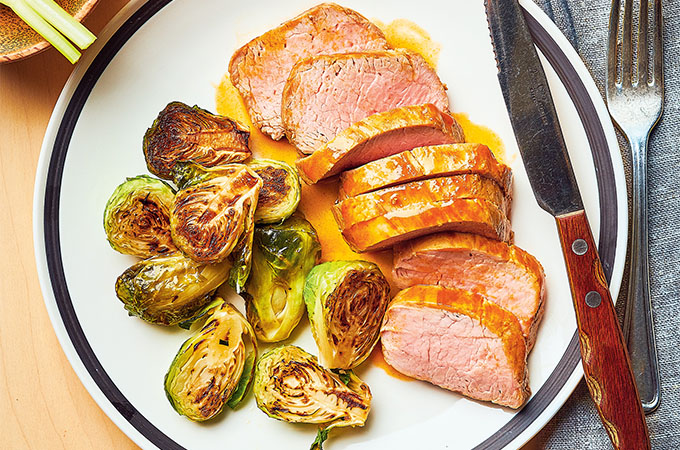
1. Pork tenderloin
That’s not surprising, given that the tenderloin has a very tender texture (as its name suggests!) that everyone adores, and it’s so easy to cook, like our maple-glazed pork tenderloin, which is one of the more popular recipes on our site!
HOW TO COOK IT
To cook it in a pan, first sear the tenderloin to caramelize it until golden, which enhances the flavour, and then finish cooking, covered, over low heat. You can also continue cooking it in the oven for 12 to 15 minutes per pound of meat. The internal temperature should reach 145°F (63°C) and it should be pink on the inside. Finish by tenting with aluminum foil so the meat can rest and the juices can redistribute evenly.
weekday recipes
Buffalo Pork Tenderloin
A light pink doneness is preferred for most cuts of pork, as this is when they are most tender and flavourful. It’s the ideal doneness for cuts like tenderloin, loin, chops and roasts. To ensure it’s cooked perfectly, use a meat thermometer inserted into the centre of the meat without touching the bone if there is one. The temperature should be at 145°F (63°C).
Certain cuts of pork, however, must be cooked through. Such is the case for pork shoulder, to ensure an enjoyable texture, and ground pork for food safety reasons (see further down: How to safely cook ground pork).
HOW TO SERVE IT
Got pork tenderloin in the freezer and don’t quite know what to do with it? There are a myriad of ways to prepare it, even for a last-minute dinner.
- In strips: Pan-fry for a delicious Asian-style stir-fry with vegetables and noodles for a colourful weeknight meal;
- In cubes: Thread them onto skewers for a dish reminiscent of summer all year long, or cook them in a stew;
- In medallions: Serve in a creamy sauce for an elegant-looking meal that’s easy to pull off.
Pork tenderloin pairs wonderfully with sweet flavours such as maple, apple and caramel, a cream-based sauce or even an Asian-inspired glaze.
2. Pork shoulder
Hearty and comforting, pork shoulder is a go-to cut for stews and braised dishes, such as pulled pork. This impressive cut has a fibrous meat that becomes tender easily. It’s an affordable cut that’s easy to find in grocery stores.
HOW TO COOK IT
Pork shoulder requires a slow and low-temperature cooking to become tender. This allows the fibres to settle and the meat to shred easily with a fork. And given that the meat is fatty, it can be cooked for a long time without drying out.
There’s nothing simpler than cooking a pork shoulder. Place it in a large pot to brown, and then add a liquid like broth (chicken, beef or vegetable), along with vegetables and seasonings, beer, or even store-bought or homemade barbecue sauce.
Place the covered pot on the stovetop and cook for 2 to 3 hours on low heat, or in the oven for 6 to 8 hours, depending on the size of the shoulder. Ensure that there is always liquid in the pot as it cooks and to add more as needed. For a simpler method, place the shoulder in the slow cooker with broth and cook for 8 to 10 hours on low, or 4 to 5 hours on high.
There’s no need for a thermometer to check doneness; the meat is ready when it pulls apart easily with a fork.
batch cooking
Barbecued Pulled Pork
HOW TO SERVE IT
To easily prepare pork shoulder with whatever you have on hand at home, you can either braise or stew it. What’s the difference between the two? For a stew, the meat must be completely submerged in liquid, whereas a braise only needs to be covered halfway and then turned during cooking, resulting in a more concentrated sauce.
Once the meat is cooked and shredded, you can:
- serve it over pasta with a mustard sauce;
- make burgers and sandwiches with mayonnaise or barbecue sauce;
- make tacos and serve in soft tortilla shells loaded with salsa and shredded lettuce.
3. Pork loin
Got fond memories of your mother’s Sunday pork roast? It’s easier to prepare than you may think; simply use a pork loin. It’s a lean meat that produces a very tender roast, but can also be made into chops that are incredibly easy to cook and great for improvising all kinds of meals.
HOW TO COOK IT
Pork loin is a lean cut that can dry out quickly, so take proper care to ensure you don’t overcook it.
If you’re using the pork loin sliced, cut into strips or chunks, simply pan-fry for 3 to 4 minutes per side. For a roast, first brown the meat on all sides in an oven-safe pot on the stovetop, then transfer it to the oven and cook for about 45 minutes at 350°F (180°C). Aim for an internal temperature of 145°F (63°C) and a light pink doneness. Once out of the oven, let it rest for about 10 minutes before serving, so that the meat settles and stays juicy throughout.
budget recipes
Pork Medallions with Wilted Leeks and Spinach
HOW TO SERVE IT
Pork loin is very easy to use. Ideally, don’t remove the thin layer of fat covering it, as this helps keep the meat tender during cooking. You can enjoy it:
- sliced to your desired thickness to make steaks, served with fries and a sauce of your choice (peppercorn, chimichurri, mayonnaise) or Montreal steak spice;
- as a simple roast studded with garlic cloves and rubbed with spices, which can then be enjoyed cold for brunch or in a sandwich;
- cooked whole in a roasting pan with aromatics like onions, garlic and fresh herbs;
- cut into cubes or strips for a quick weeknight stir-fry.
4. Pork chops
Pork chops are a classic that everyone knows and loves. They cook very quickly (in just minutes) and are a budget-friendly choice in the meat department. Pork chops come from the loin, as mentioned above, and are sold both bone-in and boneless. Chops that come from the rib section are the most flavourful.
HOW TO COOK THEM
Cook pork chops over high heat in a skillet. They only need 3 to 4 minutes per side, until golden, and then let them rest for 5 minutes. If the chops are thick, you can brown them quickly in the pan and then finish cooking in a 400°F (200°C) oven for about 6 minutes. For a light pink doneness, aim for an internal temperature of 145°F (63°C).
weekday recipes
Pork Chops with Apple-Mustard Sauce and Arugula Salad
30-Minute Recipes
Sweet and Sour Pork Chops with Peas, Cucumber and Mango
HOW TO SERVE THEM
Should you choose bone-in or boneless chops? Meat tends to stay more tender around the bone. With a bone, chops are also easier to handle when grilling. But even without the bone, you’ll get tender and juicy meat. And no matter which you go with, you can use the same sauces and ingredients. Here are a few ideas:
- For extra flavour, marinate them for 15 minutes before cooking. A simple marinade consisting of oil and fresh herbs works well, or you can try harissa and honey.
- For added texture and flavour, coat them in a nut, spice, or herb-based crust.
- Pork chops pair well with sweet-and-salty flavours, so be sure to try maple-based or fruit (pineapple, orange, apple) sauces.
5. Ground pork
Ground meat can be found in comforting dishes like meatballs, pasta sauce and shepherd’s pie. It’s tender and flavourful, and generally more affordable than ground beef.
HOW TO COOK IT
It’s the recipe that determines the cooking method. Ground pork in a taco or shepherd’s pie, for example, isn’t cooked the same way as meatballs or patties.
To cook ground meat, simply melt butter in a skillet over medium-high heat and sauté until the meat is cooked through and lightly browned.
For meatballs, preheat the oven to 400°F (200°C) and place the meatballs on a baking sheet lined with parchment paper. Brush the meatballs with oil and bake them in the oven for 10 to 12 minutes, or until cooked through and lightly browned.
For patties, heat a bit of oil in a skillet over medium-high heat and cook for about 3 minutes per side, or until golden. Cover, reduce to low heat and continue cooking for 10 minutes.
For the meatballs and patties, aim for an internal temperature of 160°F (71°C). It’s important to cook ground meat well to ensure it’s safe to eat (see below: How to safely cook ground pork).
to freeze
Extra-Tender Pork Meatballs
HOW TO SERVE IT
Ground pork is sold with different levels of fat: lean, medium, extra lean and regular. Leaner meat tends to shrink less during cooking but can get dry, making it better for fillings and stuffings. Higher-fat meat holds together better, so it’s perfect for meatballs and patties. There are so many ways to improvise with ground pork; here are a few ideas:
- Shape into burger patties and season, then add your favourite toppings: cheese slices, shredded lettuce, mango, barbecue sauce, hoisin sauce, mayonnaise, ketchup, etc.
- You can easily substitute ground beef with ground pork in any recipe.
- You can make varied meatballs by mixing the ground meat with breadcrumbs, bread or puffed rice cereal and milk for extra softness.
- Simply pan-cook ground pork and use it in stir-fries, as a taco filling or even with pasta and ramen.
You likely have heard about the risks associated with undercooked ground meat, but when it’s properly cooked, there’s no danger. Just follow these simple food safety rules:
- • aim for an internal temperature of 160°F (71°C);
- • always place cooked meat on a clean plate that hasn’t held any raw meat;
- • use separate utensils for handling raw and cooked meat;
- • wash hands and cooking tools frequently.
For more recipes to cook with the different cuts of pork, check out our themed section: